
Stovetop mac and cheese is one of those recipes that never needs a reason. Busy Tuesday, rainy Friday, picky eater night, last-minute dinner panic, it fits every single situation. This version is thick, silky, made with real cheese you shred yourself, and it comes together in about 20 minutes in one pot on the stove. No boxed powder, no baking, no waiting. Just pure, creamy comfort food that the whole family will scrape the bowl clean for.
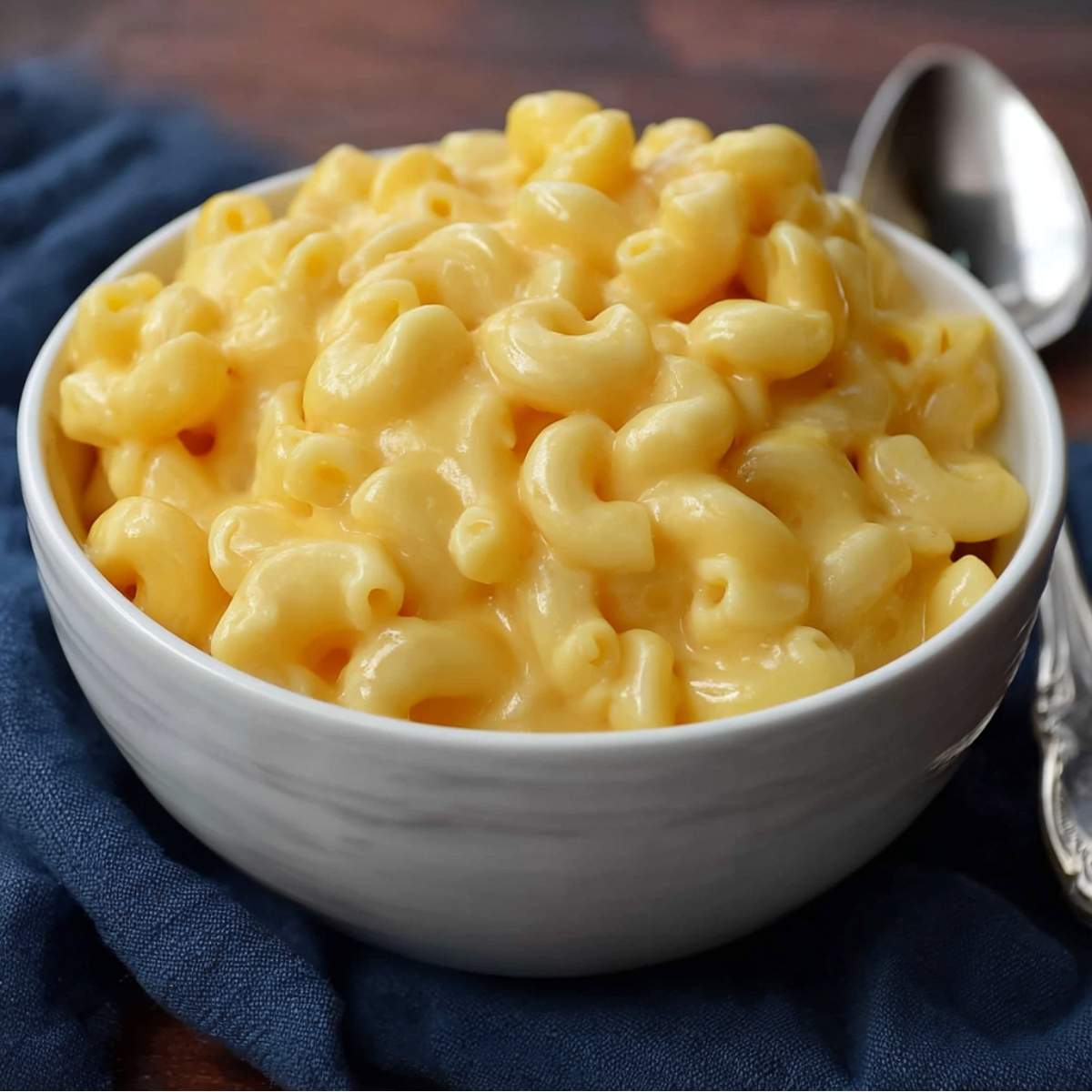
This easy stovetop mac and cheese shows up in our kitchen constantly. Back-to-school season is when I make it most, honestly. Olivia walks in the door hungry and tired and the first thing out of her mouth is always something like "please can we have mac and cheese tonight?" It also makes a regular appearance at holiday gatherings as a side dish, at potlucks, and on any night when I need everyone to be happy with dinner and I need it fast.
Jump to:
- Why You'll Love This Stovetop Mac and Cheese
- Ingredients for Stovetop Mac and Cheese
- How to Make Stovetop Mac and Cheese
- My Top Tips for Stovetop Mac and Cheese
- Little Moments in the Kitchen
- Substitutions for Stovetop Mac and Cheese
- Variations on Stovetop Mac and Cheese
- Equipment for Stovetop Mac and Cheese
- Storage Tips for Stovetop Mac and Cheese
- Olivia's Tip for Stovetop Mac and Cheese
- FAQ About Stovetop Mac and Cheese
- Conclusion
- Related
- Pairing
- 📖 Recipe
Why You'll Love This Stovetop Mac and Cheese
- It is ready in 20 minutes, start to finish. One pot, simple pantry ingredients, no oven needed. This is the best stovetop mac and cheese for those nights when dinner needs to happen right now and you don't have a plan yet.
- It is made with real, simple ingredients. No powdered cheese, no processed shortcuts. Just elbow macaroni, butter, milk, and freshly shredded sharp cheddar. You probably have everything already sitting in your kitchen right now.
- Kids and adults love it equally. Olivia calls this her all-time favorite meal, and I have served this creamy stovetop mac and cheese to grown adults who went back for thirds. Made from scratch just hits different.
Ingredients for Stovetop Mac and Cheese
The ingredient list for this stovetop mac and cheese is short, which is one of my favorite things about it. Everything is straightforward and nothing is hard to find. The magic is really in the technique and in choosing the right cheese, which I will explain right below.
What You'll Need
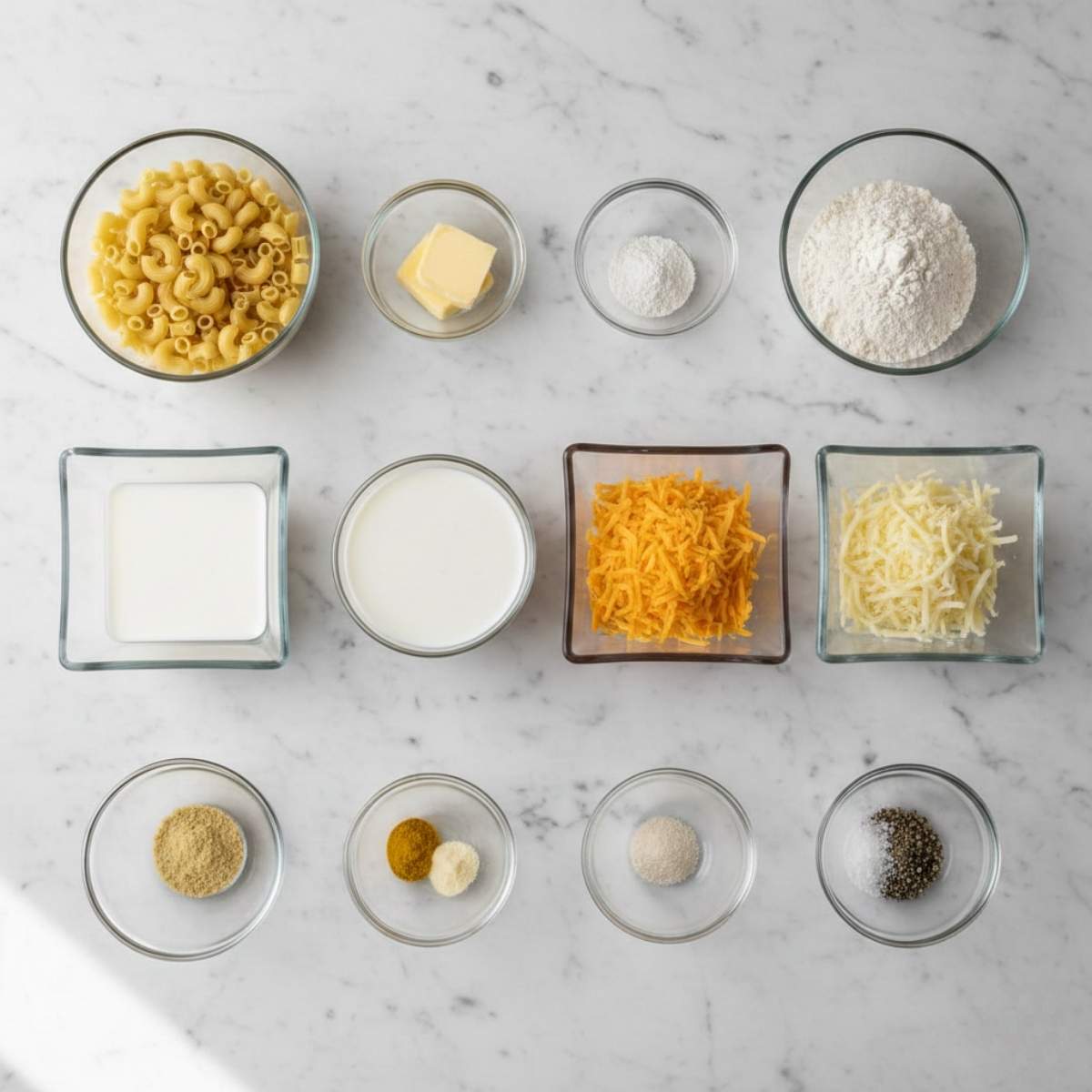
- Elbow macaroni (2 cups dry)
- Salted butter (3 tablespoons)
- All-purpose flour (2 tablespoons)
- Whole milk (1.5 cups)
- Evaporated milk (half a 12 oz can, about 6 oz)
- Sharp cheddar cheese, freshly shredded (2 cups)
- Gruyere cheese, freshly shredded (half a cup, optional but amazing)
- Powdered mustard (half a teaspoon)
- Garlic powder (quarter teaspoon)
- Salt and black pepper to taste
Why These Ingredients Matter
- Freshly shredded sharp cheddar is the single most important ingredient in a great stovetop mac and cheese. Pre-shredded bags are coated with cellulose or starch to prevent clumping in the bag, and that coating stops them from melting smoothly into your sauce. Buy a block and shred it yourself and you will immediately feel the difference. Sharp cheddar also delivers that bold, unmistakable flavor that mild cheddar simply cannot.
- Evaporated milk is what makes this stovetop mac and cheese so incredibly creamy and stable. It has had about 60% of its water removed, which means it adds richness without making the sauce thin or watery. It also helps the cheese sauce stay smooth and prevents that grainy, broken texture that trips so many people up with homemade mac and cheese.
- Powdered mustard is not something you will taste on its own, but it sharpens the flavor of the cheese and gives the sauce a subtle depth that makes people ask "what is in this?" It is one of those small things that separates a good mac and cheese from a great one every single time.
For another cozy, family-friendly dinner that comes together just as fast, check out my crockpot potato soup , it is the perfect recipe to rotate in alongside this on busy weeknights.
How to Make Stovetop Mac and Cheese
Step-by-Step Directions
The One-Pot Method is exactly why this stovetop mac and cheese is so weeknight-friendly. You cook the pasta, drain it, and build the entire cheese sauce in the same pot. One pot in, one pot out, and dinner is on the table in 20 minutes.
- Cook the elbow macaroni in a large pot of well-salted boiling water until just al dente, about 1 minute less than the package directions call for. The pasta will finish cooking inside the cheese sauce, so you do not want it fully soft yet. Drain and set aside. Do not rinse the pasta, that surface starch helps the sauce cling to every noodle.
- In the same pot, melt the butter over medium heat until it begins to foam and smell lightly nutty, about 1 minute. Whisk in the flour and cook the roux for 1 to 2 minutes, stirring constantly, until it turns a very pale golden color and smells slightly toasty. This roux is what gives the stovetop mac and cheese sauce its body and thickness without feeling heavy or starchy.
- Slowly pour in the whole milk and evaporated milk, whisking constantly so no lumps form. Keep whisking over medium heat for 3 to 4 minutes until the sauce thickens enough to coat the back of a spoon and feels noticeably heavier and slower when you drag the whisk through it.
- Reduce the heat to LOW before adding any cheese. This step is critical for creamy stovetop mac and cheese. If your stove runs hot, pull the pot off the burner entirely for 30 seconds. Stir in the powdered mustard and garlic powder. Then add the shredded sharp cheddar and Gruyere in two or three small handfuls, stirring each addition until completely melted and glossy before adding the next. The finished sauce should look smooth, thick, and deeply golden.
- Add the drained macaroni back into the pot and stir to coat every single noodle until they are completely covered in sauce and the whole pot smells rich and cheesy. Cook on LOW for another 1 to 2 minutes, stirring gently, until everything is heated through and the sauce has clung to the pasta and looks silky and thick.
- Taste and adjust salt and pepper, then serve immediately while the sauce is still loose and creamy. Stovetop mac and cheese thickens quickly as it sits, so get it to the table fast.
Hint: Never add your shredded cheese while the heat is still on HIGH. High heat causes the proteins in the cheese to seize and clump, leaving you with a greasy, grainy sauce instead of a smooth one. Always reduce to LOW or pull the pot fully off the heat before stirring in your cheese. This one rule protects the whole dish.
My Top Tips for Stovetop Mac and Cheese
The most important thing I have learned after making this creamy stovetop mac and cheese dozens of times is that low, slow heat during the cheese-melting stage is everything. Patience at that one moment protects the whole sauce and is the difference between silky and broken.
Gold Tip: Shred your cheese cold straight from the fridge, then let it sit at room temperature for about 10 minutes before adding it to the sauce. Cold cheese melts more evenly into warm liquid than cheese that goes straight in from its coldest point, where it can shock the sauce and cause clumping. This tiny habit makes your stovetop mac and cheese noticeably smoother every time.
Little Moments in the Kitchen
A few weeks ago Olivia decided she was going to help me make stovetop mac and cheese completely on her own. I stood nearby while she measured the macaroni and got the water boiling, which she was really proud of. Then it was time to shred the cheese. I handed her the block and the box grater and walked away for two minutes to answer a text. I came back to find her holding up a very sad, almost entirely flat little piece of cheddar and a pile of shredded cheese roughly the size of a small mountain. She had shredded almost the whole block. She looked at me and said "I might have gotten a little excited." We had a very cheesy dinner that night and I did not complain once.
When she tasted the finished bowl, she took one slow bite, looked up with the most serious expression, and said "this is better than the blue box." Coming from Olivia, who has been eating boxed mac and cheese since she was three, that is honestly one of the greatest compliments this recipe has ever received. I almost framed it.
Substitutions for Stovetop Mac and Cheese
No flour: To make stovetop mac and cheese no flour style, skip the roux entirely and use evaporated milk as your main thickener. Whisk one full 12 oz can of evaporated milk directly into the melted butter over medium-low heat. Allow the sauce to simmer gently for 4 to 5 minutes, stirring often, until it thickens visibly and coats the back of a spoon. This takes a few extra minutes longer than the roux version since there is no flour to kick-start the thickening, so do not rush it. Then reduce to LOW and stir in your cheese slowly. The result is still incredibly creamy, just a little looser than the roux version.
Milk options: Stovetop mac and cheese with evaporated milk alone makes the sauce even richer and more stable than using regular milk. Use one full 12 oz can in place of the whole milk and evaporated milk combination. Avoid skim or 1% milk as the sauce will turn out thin and watery.
Cheese swaps: Sharp cheddar is my first choice but you can mix in Colby Jack, Monterey Jack, smoked Gouda, or Gruyere. Always shred from a block regardless of which variety you choose.
Gluten-free: Use your favorite gluten-free elbow macaroni and use the no-flour evaporated milk method above. Check your other labels too since some broths and condiments contain hidden gluten.
Vegetarian: This stovetop mac and cheese is already vegetarian as written. Just confirm your cheese is made without animal rennet if that matters for your household.
If you need a fresh, light side to balance out all this cheesy richness, my double bean Mediterranean salad is a perfect contrast and takes only 10 minutes to pull together.
Variations on Stovetop Mac and Cheese
Spicy: Stir a quarter teaspoon of cayenne pepper into the cheese sauce along with the mustard powder, or add a full teaspoon of your favorite hot sauce right before serving. Diced pickled jalapeños stirred in at the end also give a wonderful tangy heat that pairs beautifully with sharp cheddar. This version of stovetop mac and cheese is really popular with adults and older kids who love a little kick.
Loaded Deluxe: Stir in crumbled cooked bacon, a handful of frozen green peas (they heat through in the hot pasta in about 2 minutes), and top with toasted breadcrumbs for a little crunch. A drizzle of truffle oil over the top turns this simple stovetop mac and cheese into something that feels genuinely special and dinner-party worthy without any extra effort.
Extra Creamy No-Roux Version: For the simplest and most foolproof approach, make your stovetop mac and cheese no flour by using one full can of evaporated milk in place of regular milk, skipping the flour entirely, and doubling the cheese. Simmer the evaporated milk over medium-low heat for 4 to 5 minutes until it thickens and clings to the back of a spoon before adding your cheese. This version takes a few extra minutes to thicken compared to the roux method, but once it gets there the texture is incredibly velvety. Stir in a few tablespoons of cream cheese along with the cheddar to make it even richer and thicker.
Equipment for Stovetop Mac and Cheese
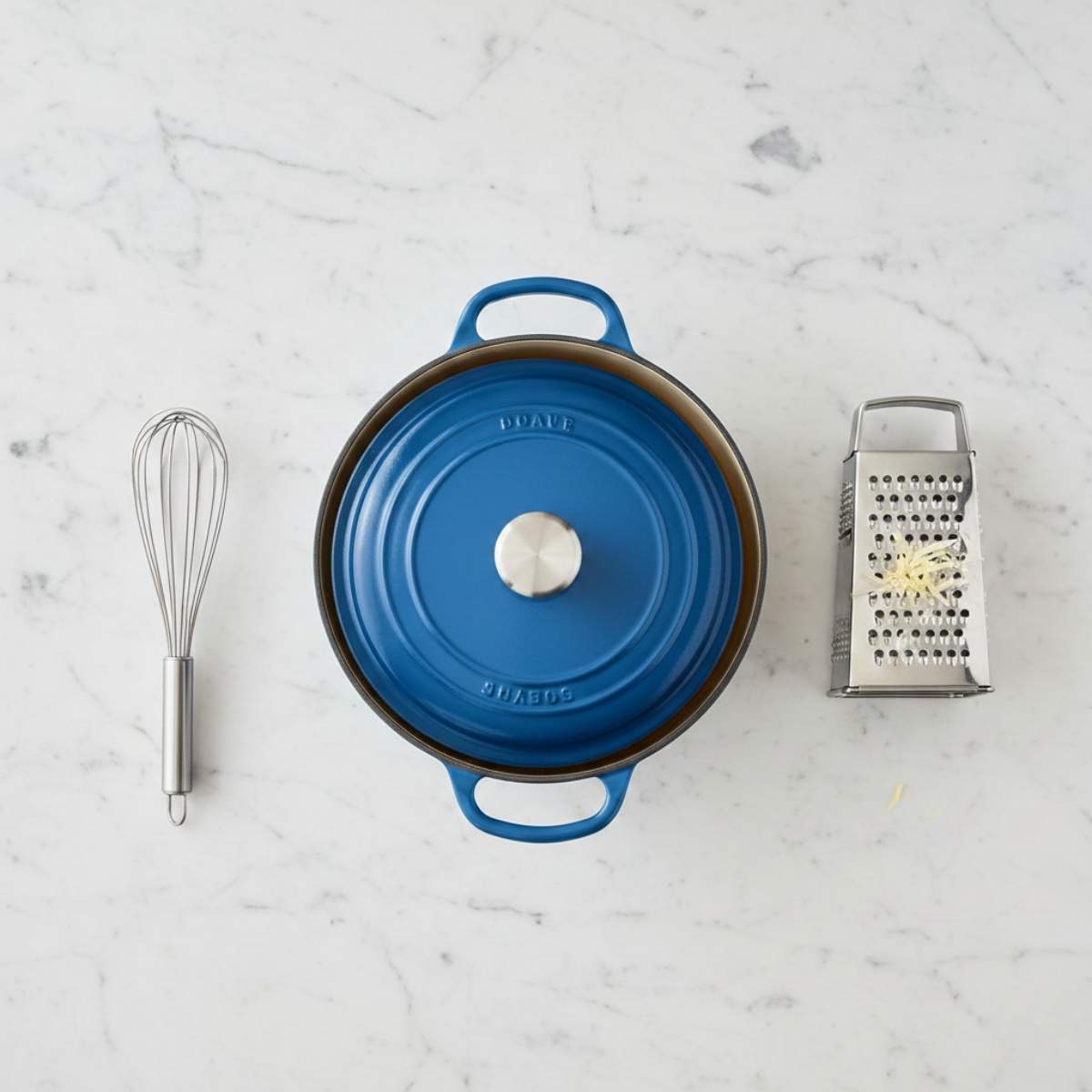
Large heavy-bottomed pot or Dutch oven: The same pot you boil the pasta in is the pot you build the sauce in, which means fewer dishes to wash. A heavy bottom is important because it distributes heat evenly and prevents hot spots that can scorch the roux or curdle the cheese sauce. A thin-bottomed pot is the fastest way to ruin a great stovetop mac and cheese.
Box grater: The only tool you need to shred your own cheese. A coarse grater gives you fluffy shreds that melt faster and more evenly than thick slices or fine grates. If you have a food processor with a grating disc, it is even faster for a big batch.
Whisk: Essential for making a smooth, lump-free roux and for incorporating the milk without any clumps forming. A wooden spoon works for the stirring steps but a whisk is the right tool for the sauce-building stages of stovetop mac and cheese.
For another warm, protein-packed weeknight dinner the whole family will love, my Mediterranean chicken zucchini bake is a great option to rotate in on nights you want something a little lighter.
Storage Tips for Stovetop Mac and Cheese
- Fridge: Store leftover stovetop mac and cheese in an airtight container for up to 3 to 4 days. The pasta absorbs the sauce as it sits and will be much thicker when you reheat it. Add a splash of whole milk and a small pat of butter before reheating over low heat, stirring gently until creamy again.
- Reheating: Low and slow is the only way to reheat this properly. Medium-high heat will cause the cheese sauce to break and turn greasy and grainy. Always use low heat and add a little liquid to bring the sauce back to its original silky texture.
- Freezing: Do not freeze this stovetop mac and cheese once the cheese sauce is fully assembled. Cream and cheese-based sauces separate when frozen and thawed and the texture will be grainy and watery with no way to fix it. If you want to prep ahead, cook and freeze the plain pasta separately and make the cheese sauce fresh when you are ready to serve.
Olivia's Tip for Stovetop Mac and Cheese
"Always add extra cheese. And then a little more after that. The more cheese goes in, the better it gets. Mom says I'm not wrong about this one." -- Olivia, age 11, cheese enthusiast and official JasmineCooking taste-tester since birth.
FAQ About Stovetop Mac and Cheese
How do you make stovetop mac and cheese without it getting grainy?
The two biggest causes of grainy stovetop mac and cheese are heat that is too high during the cheese-melting stage and using pre-shredded bagged cheese. Always reduce to low heat before adding cheese, add it in small handfuls and stir each addition until completely smooth before adding more, and always shred from a block. Those three habits will give you a silky sauce every single time.
Is it better to bake or make mac and cheese on the stovetop?
Both are great but they deliver very different results. Baked mac and cheese has a firmer, denser texture and a crispy breadcrumb top, which is wonderful for a crowd or a special occasion. Stovetop mac and cheese is creamier, faster, and more saucy, which makes it the better choice for a quick weeknight dinner or when you need comfort food in a hurry. Our house is firmly in the stovetop camp most nights.
How long do you boil the macaroni for stovetop mac and cheese?
Cook your elbow macaroni about 1 minute less than the package directions for al dente. The pasta finishes cooking when you stir it into the hot cheese sauce, so if you cook it all the way through first it will end up too soft and mushy in the final dish. Taste a noodle before draining, it should have just a tiny bit of firmness left at the very center.
What are the most common stovetop mac and cheese mistakes?
Adding cheese over high heat is the number one mistake and it breaks the sauce every time. Using pre-shredded bagged cheese is a very close second. Overcooking the pasta before it goes into the sauce is another one that catches people off guard. And skipping the final seasoning taste is something a lot of cooks do, the cheese and pasta both absorb a lot of salt, so always taste and adjust right before you serve.
Conclusion
This creamy stovetop mac and cheese is the kind of recipe that earns its spot in your permanent dinner lineup. It is fast, made with real ingredients, and tastes so much better than anything from a box that your family will genuinely stop asking for the blue box version. Once you get the hang of the one-pot method and the low-heat cheese melting technique, making stovetop mac and cheese from scratch honestly feels easier than the packaged kind ever did.
For even more inspiration and ideas, AllRecipes has a solid simple macaroni and cheese recipe worth checking out. And when you are ready to switch things up for the next cozy dinner night, my baked potato soup is another crowd-pleasing recipe the whole family will absolutely love. Happy cooking from our kitchen to yours.
Related
Looking for other recipes like this? Try these:




Pairing
These are my favorite dishes to serve with Stovetop Mac and Cheese:



📖 Recipe
Easy Stovetop Mac and Cheese
Ingredients
Equipment
Method
- Bring a large pot of well-salted water to a boil. Add the [dry elbow macaroni] and cook for about 1 minute less than the package says. Olivia likes to help me set the timer! We want it "al dente" because it will soften more once it meets the hot sauce. Drain and set aside
- In that same pot, melt the [salted butter] over medium heat. Once it's foamy, whisk in the [all-purpose flour]. Keep whisking for about 1-2 minutes until it smells slightly toasty. This is the "magic paste" that makes our sauce thick and dreamy.
- Slowly pour in the [whole milk] and [evaporated milk] while whisking constantly. I always tell Olivia this is like making a potion, keep it moving so no lumps form! Cook for 3-4 minutes until the sauce is thick enough to coat the back of your spoon.
- Turn the heat to LOW (very important!). Stir in the [powdered mustard], [garlic powder], [salt and black pepper]. Now, add the [sharp cheddar cheese] and [Gruyere cheese] in small handfuls. Stir gently until every bit is melted and glossy.
- Fold the cooked macaroni back into the cheese sauce. Stir gently for 1-2 minutes on low heat until the pasta is perfectly coated and the sauce is hugging every noodle. Serve it immediately while it's still at peak creaminess!
Nutrition
Notes
- The Golden Rule: Always shred your cheese from a block! Pre-shredded cheese has a waxy coating that makes the sauce grainy.
- Reheating Tip: If you have leftovers, the pasta will soak up the sauce. Reheat it on the stove with a splash of milk and a tiny bit of butter over low heat to bring back that silky texture.
- Variation: For a bit of crunch, Olivia loves it when we sprinkle some toasted panko breadcrumbs on top right before serving!
- Substitutions: You can use 100% sharp cheddar if you don't have Gruyere on hand, it will still be absolutely delicious.




Leave a Reply