
Scallops and pasta is one of those dinners that feels completely fancy and special occasion-worthy but comes together in about 30 minutes on a regular Tuesday night with ingredients you can find at any grocery store. We are talking perfectly seared sea scallops with a gorgeous golden crust, tossed with al dente pasta in a silky white wine garlic butter sauce with a squeeze of fresh lemon and a handful of parmesan. It tastes like something you would pay a lot of money for at a nice restaurant and I genuinely love that I can make it at home for a fraction of that cost.
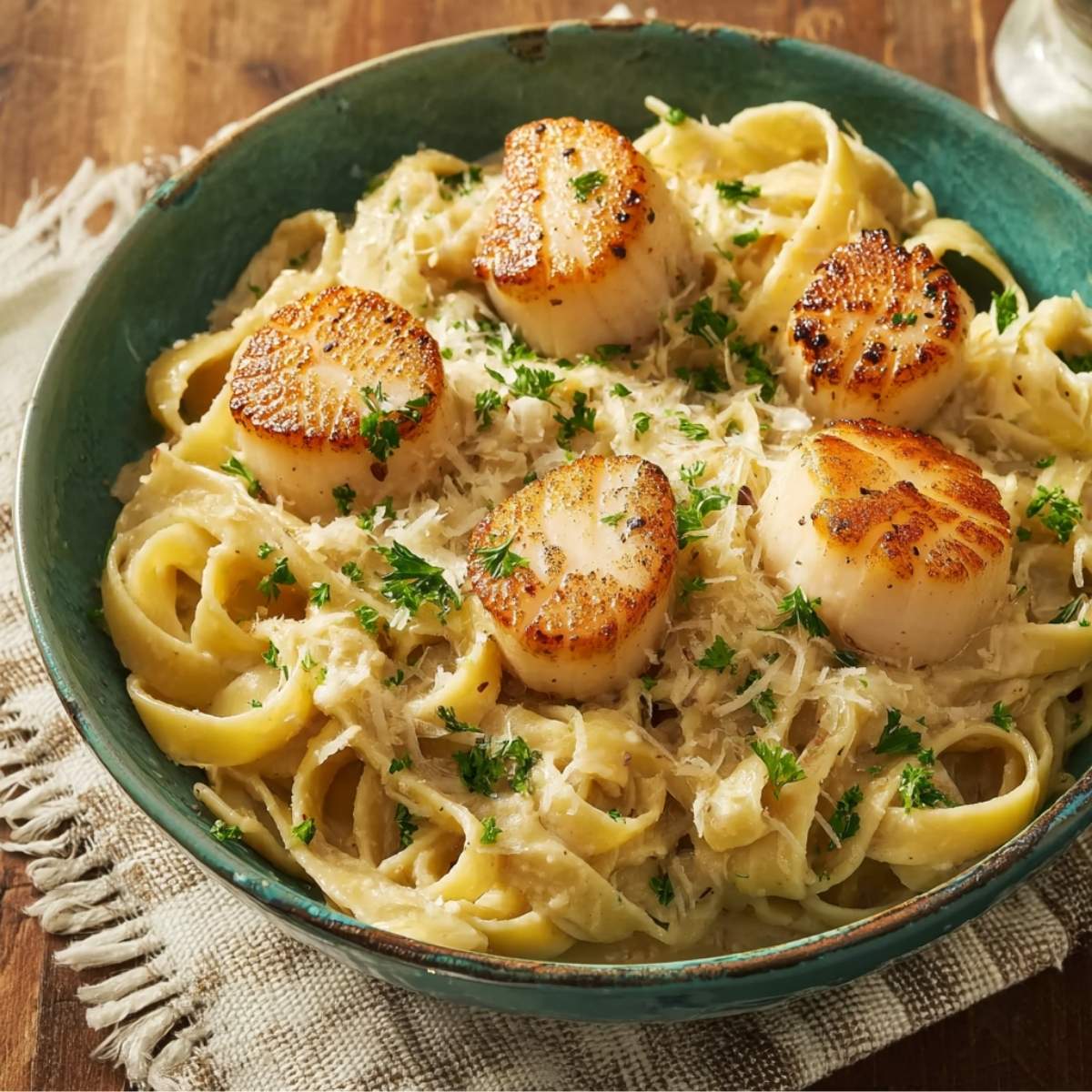
This scallops and pasta recipe has become my go-to dinner when I want to make someone feel taken care of without spending hours in the kitchen. It works for date nights at home, for when my parents visit and I want to impress without stressing, and honestly for any weeknight when I want dinner to feel a little more intentional and beautiful than usual. The trick is in the sear and the sauce, and once you know both of those things this recipe is completely yours to make over and over again.
Jump to:
- Why You'll Love This Scallops and Pasta
- Ingredients for Scallops and Pasta
- How to Make Scallops and Pasta
- My Top Tips for Scallops and Pasta
- Little Moments in the Kitchen
- Substitutions for Scallops and Pasta
- Variations on Scallops and Pasta
- Equipment for Scallops and Pasta
- Storage Tips for Scallops and Pasta
- Olivia's Tip for Scallops and Pasta
- FAQ about Scallops and Pasta
- Related
- Pairing
- 📖 Recipe
Why You'll Love This Scallops and Pasta
- Restaurant quality on a home kitchen timeline. The whole dish from start to finish takes 30 minutes, uses one pan for the scallops and sauce, and one pot for the pasta. The result looks and tastes like something a trained chef made, but the technique is genuinely simple once you know the steps.
- The sauce works with everything. This creamy white wine garlic butter sauce is so good that Olivia has asked me to put it on regular pasta with no scallops, on chicken, and once memorably on garlic bread. It is rich, bright, and deeply savory all at once.
- Impressive enough for guests, easy enough for weeknights. Scallops and pasta is one of those meals that lands beautifully no matter the occasion. It looks elegant on the plate, it tastes deeply satisfying, and nobody needs to know it took you less than half an hour.
Ingredients for Scallops and Pasta
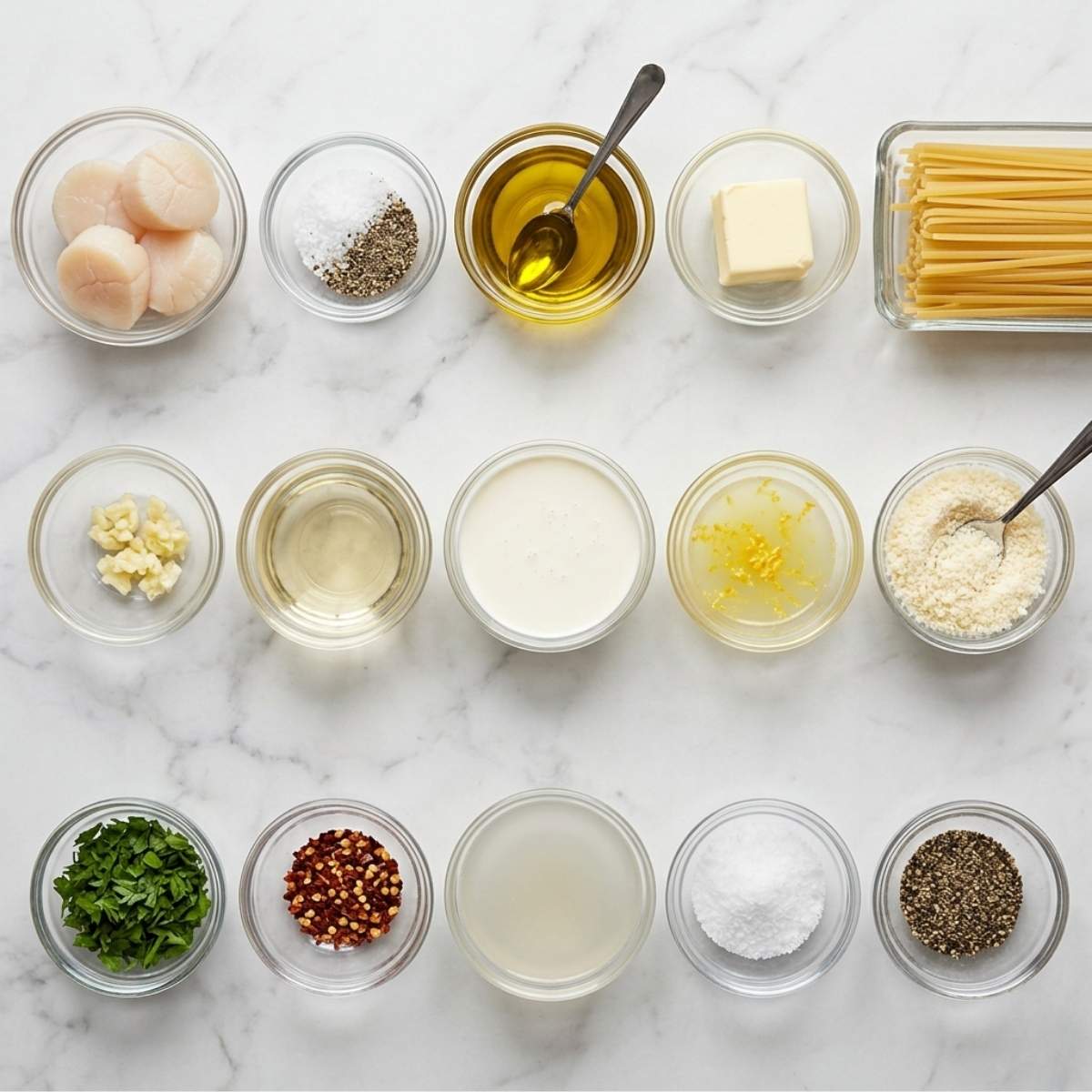
The ingredient list for this scallops and pasta recipe is short and focused. The quality of your scallops matters more here than in almost any other recipe, so this is one place worth spending a little extra at the seafood counter.
What You'll Need
For the Scallops:
- Large dry-packed sea scallops
- Kosher salt and black pepper
- Olive oil
- Unsalted butter
For the Pasta and Sauce:
- Linguine or spaghetti
- Unsalted butter
- Garlic cloves, minced
- Dry white wine (such as Pinot Grigio or Sauvignon Blanc)
- Heavy cream
- Fresh lemon juice and lemon zest
- Freshly grated parmesan cheese
- Fresh parsley, chopped
- Red pepper flakes (optional)
- Reserved pasta water
- Salt and black pepper
Why These Ingredients Matter
- Dry-packed sea scallops are the single most important ingredient decision in this entire scallops and pasta recipe. Dry-packed means the scallops have not been treated with sodium tripolyphosphate, which is a preservative solution that causes scallops to absorb extra water. Wet-packed scallops release all that stored water into your pan the moment they hit the heat, which means they steam instead of sear and you never get that beautiful golden crust. Dry-packed scallops go into a hot pan and immediately begin to caramelize. Always ask your fishmonger for dry-packed and look for scallops that smell clean and ocean-fresh, not fishy.
- Dry white wine adds an essential layer of acidity and complexity to the sauce that you simply cannot replicate with broth alone. When the wine hits the hot pan after the garlic it deglazes all those golden caramelized bits from the bottom and builds the foundation of the entire sauce. Use something you would actually enjoy drinking because the flavor concentrates as it cooks and a bad wine makes a noticeably worse sauce.
- Reserved pasta water is liquid gold for this recipe and most people pour it straight down the drain before they even think about it. The starchy pasta cooking water emulsifies the butter, cream, and parmesan into a silky, cohesive sauce that clings to every strand of pasta. Without it the sauce can feel greasy and separated. Always save at least a full cup before you drain your pasta.
How to Make Scallops and Pasta
Step-by-Step Directions
- Bring a large pot of generously salted water to a full rolling boil. Cook your linguine or spaghetti according to package directions until al dente, meaning it still has a slight firmness when you bite through it. Before draining, scoop out at least 1 full cup of pasta water and set it aside. Drain the pasta and toss it with a tiny drizzle of olive oil to prevent sticking while you finish the sauce.
- Prepare the scallops. Pat the scallops completely dry on both sides with paper towels. This is not optional. Any moisture on the surface of the scallop will create steam in the pan and prevent the crust from forming. Pat them dry, then season generously on both sides with kosher salt and black pepper just before they go into the pan.
- Heat the pan for searing. Place a large stainless steel or cast-iron skillet over high heat until it is ripping hot, about 2 full minutes. Add the olive oil and let it heat until it shimmers and just begins to smoke slightly. The pan needs to be extremely hot before the scallops go in.
Pro-Tip: Test the heat by holding your hand about 3 inches above the pan. If you can feel intense radiant heat immediately, it is ready. A pan that is not hot enough will cause the scallops to stick and steam rather than sear. High heat and dry scallops are the two non-negotiables for a perfect crust.
- Sear the scallops. Place the scallops in the pan in a single layer, leaving at least an inch of space between each one. Do not crowd the pan. If they are too close together, the temperature drops and they will steam instead of sear. Cook without touching or moving them for exactly 2 minutes until a deep golden brown crust forms on the bottom and the cooked portion has crept about halfway up the side of each scallop.
- Flip and finish. Add the butter to the pan, let it melt and foam, and flip each scallop with tongs. Cook for 1 to 2 more minutes until the second side is golden and the scallops feel slightly firm but still springy when you gently press the center. The internal temperature should reach 130°F for a perfectly cooked, slightly translucent center or 145°F for fully cooked through. Transfer immediately to a plate and do not let them sit in the hot pan or they will overcook and turn rubbery.
- Make the garlic white wine sauce. In the same pan over medium heat, add a tablespoon of butter. Once melted and foamy, add the minced garlic and cook for 30 seconds, stirring constantly, until fragrant and pale golden. Watch it closely because garlic burns within seconds and burnt garlic will make your entire sauce bitter.
- Deglaze with white wine. Pour the dry white wine into the pan and stir to scrape up all the golden caramelized bits from the bottom of the pan. Let the wine bubble and reduce by about half, about 2 minutes, until it smells less sharp and more mellow and the liquid looks slightly syrupy.
- Add the cream and lemon. Pour in the heavy cream and stir to combine with the wine reduction. Add the lemon zest and a squeeze of fresh lemon juice. Let the sauce simmer gently over medium-low heat, stirring occasionally, for 3 to 4 minutes until it thickens enough to coat the back of a spoon in a thin, silky layer.
Note: Keep the heat at medium-low once the cream goes in. Heavy cream can break and curdle if it boils aggressively. You want a gentle simmer with small lazy bubbles around the edges, not a rolling boil.
- Finish the sauce with parmesan. Remove the pan from the heat and stir in the freshly grated parmesan until it melts completely into the sauce. Add a splash of reserved pasta water and stir to bring everything together into a glossy, cohesive sauce. Season with salt, black pepper, and red pepper flakes to taste.
- Toss the pasta and serve. Add the drained pasta directly to the sauce and toss to coat every strand thoroughly. Add more pasta water a splash at a time if the sauce needs loosening. Divide into warm bowls, arrange the seared scallops on top, and finish with fresh parsley, an extra grating of parmesan, and a thin slice of lemon on the rim. Serve immediately while the scallops are still warm.
Hint: Warm your pasta bowls in a low oven or by filling them with hot water for a minute before plating. Scallops and pasta cool down fast and a warm bowl keeps everything at the right temperature from the first bite to the last.
For another dinner that feels genuinely special on a weeknight timeline, my Healthy Marry Me Chicken uses a very similar creamy garlic sauce technique and is just as impressive on the plate.
My Top Tips for Scallops and Pasta
The most important thing I can tell you about this entire scallops and pasta recipe is that the sear makes or breaks the dish. Dry scallops, a ripping hot pan, and the patience to leave them completely alone for a full two minutes without touching or moving them. That is it. Those three things together give you the golden, caramelized crust that makes this dish look and taste like restaurant food. Move them too early and the crust tears off and stays in the pan.
Gold Tip: Never cook scallops straight from the refrigerator. Take them out 15 minutes before cooking and let them come closer to room temperature. Cold scallops dropped into a hot pan lower the pan temperature dramatically, which disrupts the sear and makes them cook unevenly. Room temperature scallops hit the pan and immediately begin to develop that beautiful crust without losing the heat you worked to build.
Little Moments in the Kitchen
I have been making some version of scallops and pasta since before Olivia was born, but the first time I made it with her watching from the counter, she went completely silent the moment the scallops hit the pan. The sizzle was loud and dramatic and she grabbed the counter with both hands and said, "Mom that sounds dangerous." I told her it was supposed to sound exactly like that and that the loud sizzle meant the pan was hot enough and everything was going perfectly.
She watched every second of that two-minute sear without blinking, and when I flipped them and she saw the golden crust she actually gasped. A real, genuine gasp. She said, "You made them look like the fancy restaurant ones." When she tasted the finished pasta she went quiet in that particular way that means she is very focused on enjoying something and does not want to talk. Then she looked up and said, "Can we have this every Friday?" We have had it roughly twice a month since then and she still gasps a little when the scallops hit the pan. I love that about her.
Substitutions for Scallops and Pasta
- Scallops: Bay scallops are smaller, cook in about 1 to 2 minutes per side, and are significantly less expensive than sea scallops. They work beautifully in this sauce for a more budget-friendly version of scallops and pasta. Shrimp is also an excellent swap and follows the same searing technique with a cook time of about 2 minutes per side until pink and curled.
- Heavy cream: For a lighter sauce, swap the heavy cream for half-and-half or full-fat coconut cream for a dairy-free version. The sauce will be slightly thinner with half-and-half so let it reduce a little longer. Do not use milk as it is too thin and can curdle when combined with the wine.
- White wine: If you prefer to cook without alcohol, substitute an equal amount of low-sodium chicken broth with an extra squeeze of lemon juice. The depth will be slightly different but the sauce is still absolutely delicious.
- Pasta: Linguine and spaghetti are classic choices but fettuccine, tagliatelle, or even a short pasta like rigatoni works beautifully with this sauce. For a gluten-free version, use your favorite gluten-free pasta and add an extra splash of pasta water to the sauce since gluten-free pasta releases more starch.
- Parmesan: Pecorino Romano makes a wonderful substitute with a slightly sharper, saltier flavor that works really well with the lemon and white wine in this sauce.
Variations on Scallops and Pasta
- Red sauce scallop pasta: Skip the cream and wine sauce entirely and instead use a simple garlic and crushed tomato base. Saute the garlic in olive oil, add crushed San Marzano tomatoes, season with salt, red pepper flakes, and fresh basil, and simmer for 15 minutes until rich and thick. Nestle the seared scallops into the sauce just before serving over spaghetti. This lighter, Italian-inspired red sauce version of scallops and pasta is bright, bold, and completely stunning.
- Lemon butter scallops and pasta: For the simplest and most elegant variation, skip the cream entirely and finish the sauce with just butter, lots of lemon juice and zest, garlic, white wine, and a big handful of fresh parsley. This version lets the natural sweetness of the scallops shine without the richness of cream and it feels lighter and more summery. Add a handful of baby spinach or cherry tomatoes to the sauce for color and freshness.
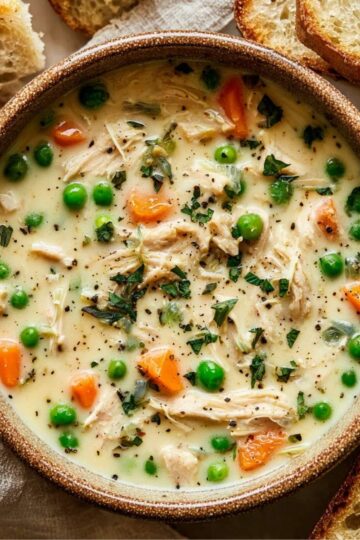
- Spicy scallops and pasta: Double the red pepper flakes in the sauce and add a small finely chopped fresno chili with the garlic. The gentle heat builds beautifully against the sweetness of the scallops and the richness of the cream sauce. Finish with extra lemon and fresh parsley to balance the spice. This version pairs wonderfully alongside a bowl of my Creamy Chicken Vegetable Soup for a dinner spread that feels genuinely special.
Equipment for Scallops and Pasta
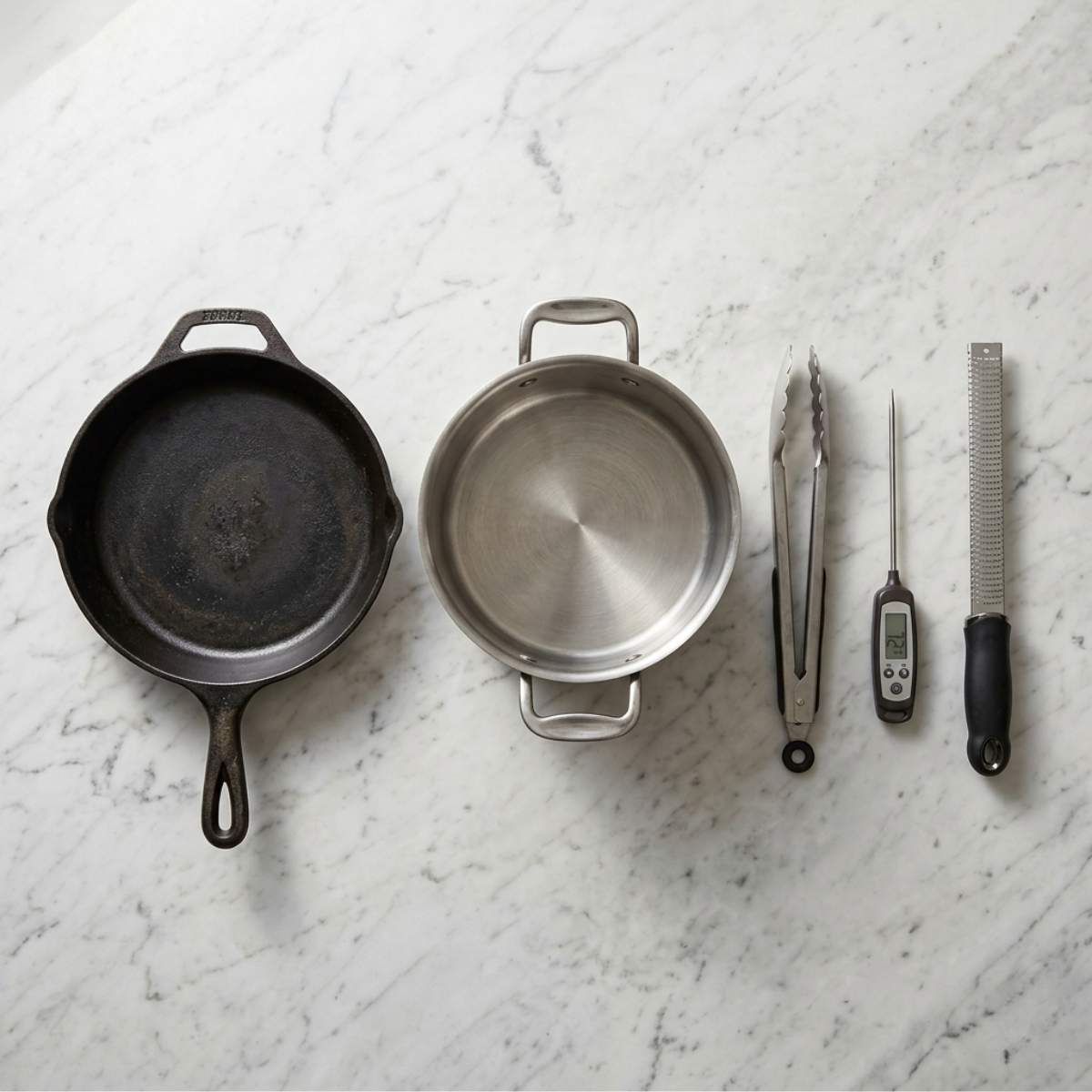
- Cast-iron or stainless steel skillet: The single most important piece of equipment for this recipe. Both materials hold and distribute heat evenly and get hot enough to create a proper sear on the scallops. A nonstick pan does not get hot enough for searing and will give you pale, steamed scallops instead of golden ones.
- Large pasta pot: Use the biggest pot you own for the pasta. Pasta needs a generous amount of water to cook evenly and not stick together, and you need enough volume to collect that crucial cup of starchy pasta water before draining.
- Tongs: Essential for flipping the scallops precisely and quickly without tearing the crust or burning your fingers. Tongs give you control that a spatula simply cannot match when you are working with delicate seared seafood.
- Meat thermometer: Use it to check your scallops. 130°F for a silky, slightly translucent center and 145°F for fully cooked through. It takes two seconds and removes all guesswork from the most expensive ingredient in this dish.
- Microplane: For zesting the lemon directly over the sauce in fine, fragrant wisps that dissolve beautifully rather than large chunks of zest.
Storage Tips for Scallops and Pasta
- Fridge: Store leftover scallops and pasta together in an airtight container in the refrigerator for up to 2 days. Seafood does not keep as long as meat so eat the leftovers promptly and do not push past the 2-day mark.
- Reheating: Reheat gently in a skillet over low heat with a splash of water or broth to loosen the sauce. Never microwave scallops on high power as they turn rubbery and tough within seconds. Low and slow on the stovetop keeps them as tender as possible.
- Freezing: I do not recommend freezing this scallops and pasta dish. The heavy cream sauce will separate and become grainy when thawed, and the scallops will lose their delicate texture completely. This is a make-fresh-and-eat recipe.
- Make-ahead tip: You can make the garlic white wine cream sauce up to 2 days ahead and store it separately in the fridge. Reheat gently on low heat, then sear your scallops fresh and cook your pasta to order. This cuts the active cooking time on the night you serve it to about 15 minutes.
Olivia's Tip for Scallops and Pasta
Olivia says you absolutely must squeeze extra lemon over your bowl right before you eat it because it makes everything taste brighter and more exciting. She also says that if you are not sure about scallops you should just try one tiny piece because they taste way better than they sound and she speaks from personal experience on this. She was skeptical once and she is not skeptical anymore.
FAQ about Scallops and Pasta
What type of pasta goes best with scallops?
Long pasta shapes like linguine, spaghetti, and tagliatelle are the most traditional and most popular choices for scallops and pasta because they tangle beautifully with the light, silky sauce and the scallops sit elegantly on top. Linguine is my personal favorite because its flat, slightly wide shape picks up the creamy garlic sauce in every bite. That said, a wide short pasta like rigatoni or pappardelle also works wonderfully if you prefer something with more texture to catch the sauce.
What sauce goes well with scallops?
Scallops are naturally sweet, delicate, and slightly briny, so they pair best with sauces that complement rather than overpower them. A white wine garlic butter sauce is the classic choice and works beautifully. A light cream and parmesan sauce adds richness without masking the scallop flavor. A simple lemon butter sauce is elegant and lets the scallops be the star. A tomato and basil sauce works wonderfully for a lighter, more Italian-inspired version. What does not work well are very heavy, intensely spiced sauces that completely bury the subtle flavor of a good scallop.
Can heart patients eat scallops?
Scallops are actually one of the leaner seafood options available, low in saturated fat and a good source of lean protein, magnesium, and omega-3 fatty acids. Many cardiologists consider moderate seafood consumption beneficial for heart health. However, scallops are higher in cholesterol and sodium than some other proteins. If you have specific heart health concerns or dietary restrictions, please always consult your doctor or a registered dietitian about what works best for your individual situation. I am a home cook and a mom, not a medical professional.
What does Gordon Ramsay put on scallops?
Gordon Ramsay is famously particular about scallops and his technique focuses on a few key principles that align perfectly with this recipe. He insists on completely dry scallops, a ripping hot pan, unsalted butter basted continuously over the top of the scallops as they cook, and a simple, clean accompaniment that lets the scallop itself be the star. He typically finishes with fresh lemon, a light herb oil, and a puree of some kind underneath. The same fundamentals that make his scallops great, the dry surface, the hot pan, the butter baste, are exactly what make this scallops and pasta recipe work so well at home.
Conclusion
This easy scallops and pasta is the kind of recipe that makes cooking feel genuinely exciting again. The golden seared crust on the scallops, the silky white wine garlic cream sauce, the al dente pasta soaking up every bit of flavor in the bowl. It is a dinner that looks like you tried very hard and feels completely effortless once you know the technique. Whether you make it for a special occasion or just a regular Wednesday when you want dinner to feel a little more intentional, this dish delivers every single time.
I hope this scallops and pasta becomes one of your most-loved dinners the way it has become one of mine. Come back and leave a comment letting me know how yours turned out and what variation you tried! And for even more inspiration on elegant pasta and seafood pairings, the community at Allrecipes has a wonderful creamy bay scallop spaghetti that is worth exploring when you want a slightly different take on this classic combination.
Related
Looking for other recipes like this? Try these:

Pairing
These are my favorite dishes to serve with scallops and pasta:
📖 Recipe
Easy Scallops and Pasta (Creamy Garlic Sauce)
Ingredients
Equipment
Method
- Bring a big pot of salted water to a boil and cook the [linguine] until al dente. Olivia always sets the timer and reminds me not to overcook it. Before draining, save a cup of that starchy [pasta water], it's our little secret for silky sauce.
- Pat the [scallops] completely dry with paper towels, this is the step I never skip. Olivia likes to help count them while I season with [salt] and [black pepper]. Dry scallops = golden crust.
- Heat [olive oil] in a hot skillet until shimmering. Place scallops in a single layer and don't touch them for 2 minutes. That sizzle always makes Olivia smile. Add [butter], flip, and cook another minute until golden.
- In the same pan, melt more [butter] and cook [garlic] for about 30 seconds. I always tell Olivia to watch closely, garlic goes from perfect to burnt in seconds.
- Pour in the [white wine] and scrape up all those flavorful bits from the pan. Let it reduce, then stir in [heavy cream], [lemon juice], and [lemon zest]. The kitchen starts to smell amazing right about here.
- Turn off the heat and stir in [parmesan] until melted. Add a splash of [pasta water] to make everything smooth and glossy. Olivia always says this is when it turns into 'fancy restaurant sauce.'
- Toss the cooked [pasta] into the sauce until every strand is coated. Add more [pasta water] if needed. This is Olivia's favorite part, she loves tossing it all together.
- Plate the pasta and top with the golden [scallops]. Sprinkle [parsley], a little extra [parmesan], and a pinch of [red pepper flakes]. Serve warm and enjoy every bite together.
Nutrition
Notes
- Always use dry-packed scallops for the best golden sear.
- If you don't have wine, substitute with chicken broth and extra lemon juice.
- For a lighter version, swap heavy cream with half-and-half.
- Store leftovers in the fridge for up to 2 days and reheat gently.
- This dish pairs beautifully with a simple salad or garlic bread for a cozy family dinner.
Leave a Reply