
Mediterranean steak bowl dinners have a way of making a regular Tuesday night feel like something worth sitting down for. You get tender, marinated steak sliced thin over a warm grain base, piled high with crisp romaine, creamy hummus, kalamata olives, crumbled feta, and the most incredible herbed Greek yogurt dressing you have ever drizzled over anything. This Mediterranean steak bowl is fresh, bold, and satisfying in a way that makes you feel genuinely good after eating it.
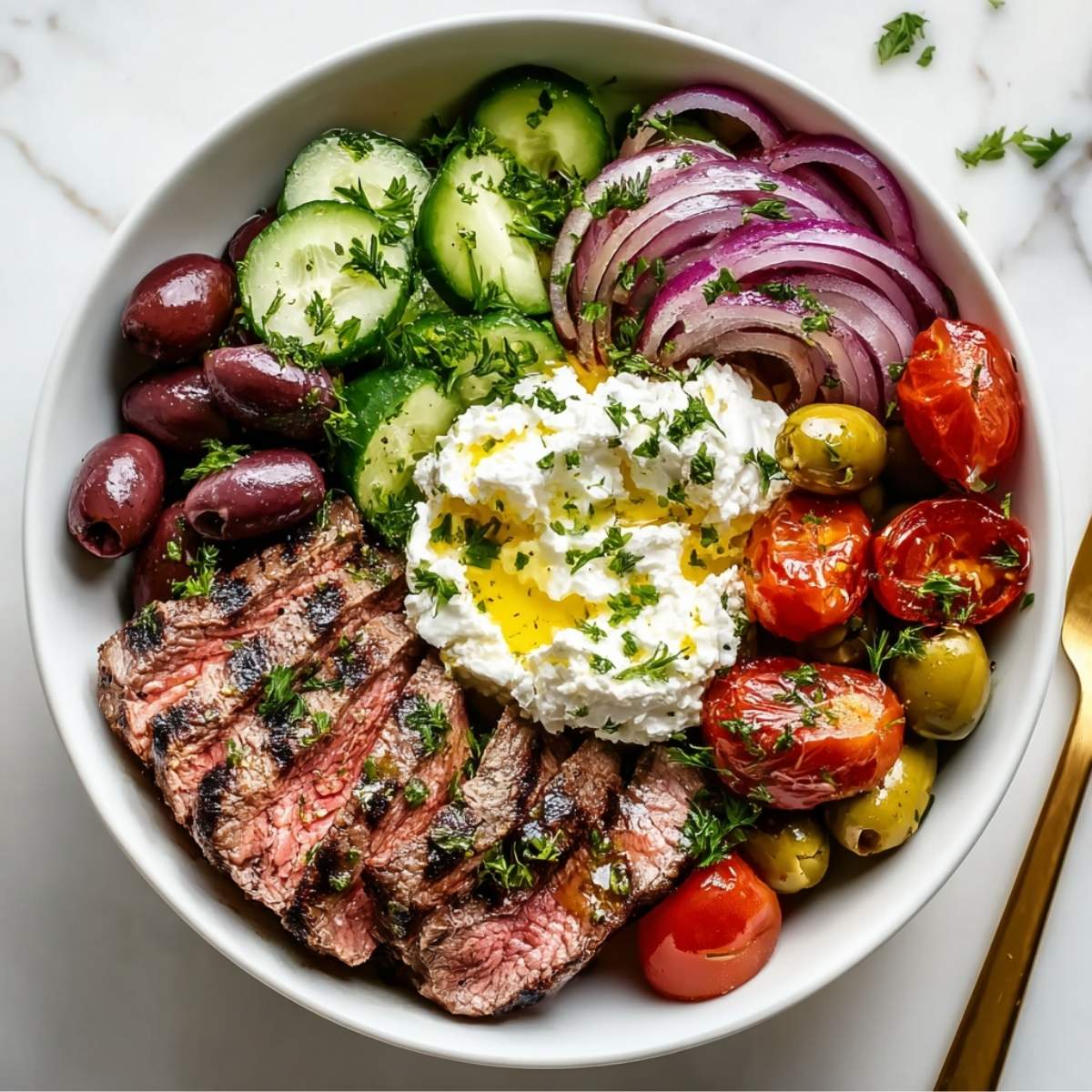
What I love most about this Mediterranean steak bowl recipe is how much flavor you get from such a simple process. The flank steak marinade does all the heavy lifting overnight, the grain base cooks hands-off on the stovetop, and the toppings come together in minutes. It is the kind of bowl that looks completely impressive on the table but requires very little actual effort to pull off. Olivia calls it "the fancy bowl" and requests it at least twice a month, which is the highest compliment she gives any dinner in this house.
Jump to:
- Why You'll Love This Mediterranean Steak Bowl
- Ingredients for Mediterranean Steak Bowl
- How to Make Mediterranean Steak Bowl
- My Top Tips for Mediterranean Steak Bowl
- Little Moments in the Kitchen
- Substitutions for Mediterranean Steak Bowl
- Variations on Mediterranean Steak Bowl
- Equipment for Mediterranean Steak Bowl
- Storage Tips for Mediterranean Steak Bowl
- Olivia's Tip for Mediterranean Steak Bowl
- FAQ About Mediterranean Steak Bowl
- Conclusion
- Related
- Pairing
- 📖 Recipe
Why You'll Love This Mediterranean Steak Bowl
- The flank steak marinade makes the meat incredibly tender and flavorful. Balsamic vinegar, Dijon mustard, garlic, and olive oil work together overnight to tenderize the steak and build a deep, savory flavor that makes every single slice taste like something from a proper Mediterranean restaurant.
- It is a complete, balanced meal in one bowl. Protein from the steak, complex carbohydrates from the grain base, healthy fats from the hummus and olive oil dressing, and vitamins from the fresh vegetables. This Mediterranean steak bowl genuinely has everything and it keeps you full and satisfied for hours.
- Everyone builds their own bowl. Set out all the toppings and let everyone customize from there. Olivia goes heavy on the hummus and light on the olives. I go the opposite direction. Nobody argues and everyone is happy. That is a weeknight win.
Ingredients for Mediterranean Steak Bowl
Everything in this bowl is fresh, seasonal, and easy to find. The marinade comes together in minutes and the toppings are mostly no-cook assembly. This is real Mediterranean cooking at home without any fuss.
What You'll Need
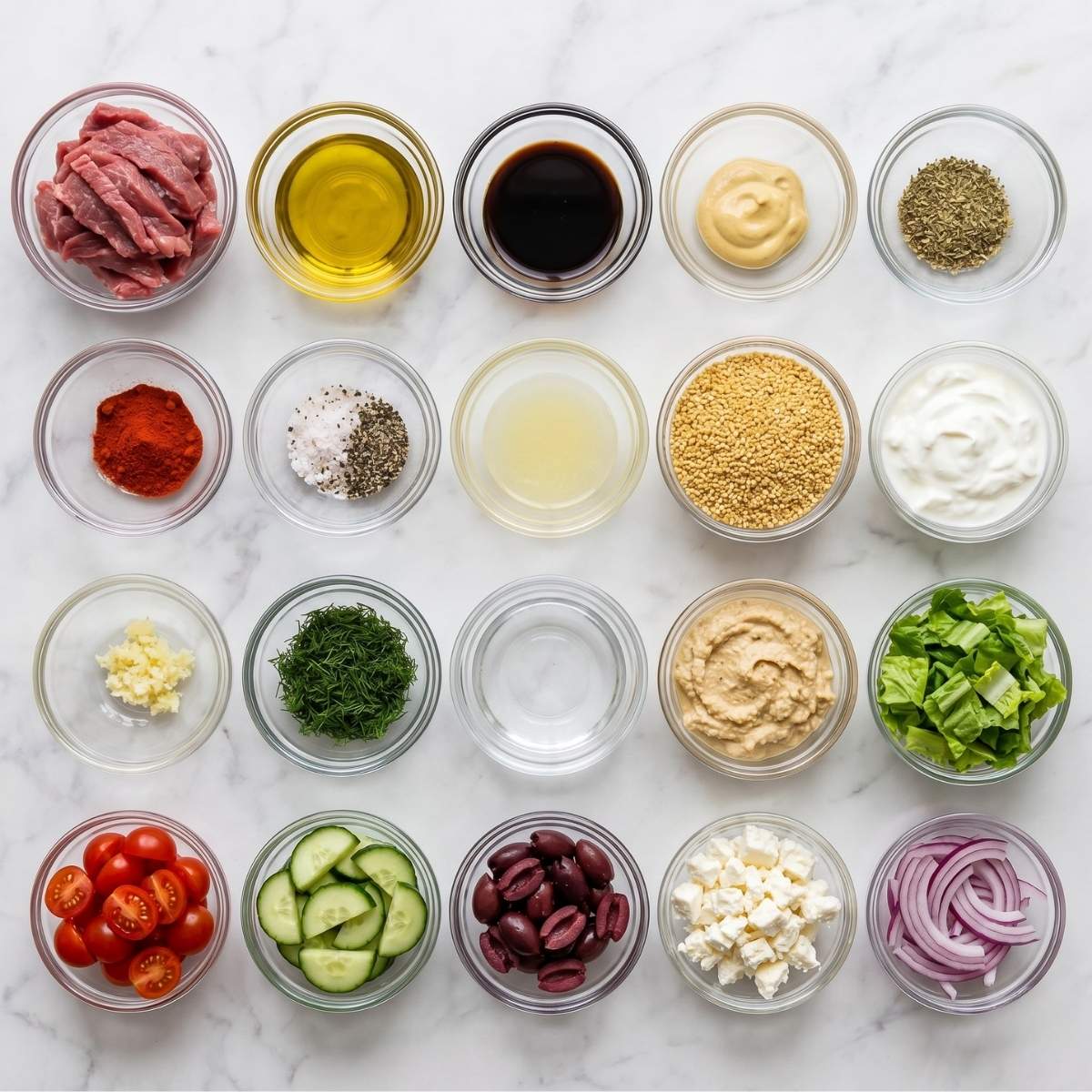
For the Mediterranean steak marinade:
- 1.5 pounds flank steak or top sirloin
- 3 tablespoons olive oil
- 2 tablespoons balsamic vinegar
- 1 tablespoon Dijon mustard
- 3 cloves garlic, finely minced
- 1 teaspoon dried oregano
- ½ teaspoon smoked paprika
- ½ teaspoon salt
- ¼ teaspoon black pepper
- 1 tablespoon fresh lemon juice
For the grain base:
- 1 cup dry couscous or quinoa
- 1.5 cups low-sodium chicken or vegetable broth
- 1 tablespoon olive oil
- Pinch of salt
For the herbed Greek yogurt dressing:
- ½ cup plain full-fat Greek yogurt
- 2 tablespoons fresh lemon juice
- 1 tablespoon olive oil
- 1 small garlic clove, finely grated
- 2 tablespoons fresh dill or parsley, finely chopped
- Salt and pepper to taste
- 1 to 2 tablespoons water to thin
For the bowl toppings:
- ½ cup garlicky hummus (store-bought or homemade)
- 2 cups romaine lettuce or baby spinach, chopped
- 1 cup cherry tomatoes, halved
- 1 English cucumber, sliced into half moons
- ⅓ cup kalamata olives, pitted and halved
- ⅓ cup crumbled feta cheese
- ¼ red onion, thinly sliced
- Fresh parsley for garnish
Why These Ingredients Matter
- Flank steak for the Mediterranean steak marinade: Flank steak is one of the best cuts for a Mediterranean steak bowl because it is lean, full of beefy flavor, and takes on a marinade beautifully. The long muscle fibers in flank steak absorb the balsamic vinegar and garlic deeply overnight, which is what gives you that complex, savory flavor all the way through rather than just on the surface. Always slice flank steak against the grain after resting or the slices will be chewy rather than tender.
- Balsamic vinegar and Dijon mustard in the marinade: This combination is the backbone of the flank steak marinade with balsamic vinegar and Dijon mustard that makes this bowl taste so distinctly Mediterranean. The balsamic adds a deep, slightly sweet acidity that tenderizes the meat and builds color when the steak hits the pan. The Dijon acts as an emulsifier that holds the marinade together and adds a subtle sharpness that cuts through the richness of the beef.
- Garlicky hummus as the bowl base: A generous spoonful of garlicky hummus base for the bowl is what sets this Mediterranean steak bowl apart from a basic grain bowl. It adds creaminess, richness, and a savory depth that works as both a sauce and a spread underneath everything else. It also means you do not need a heavy cream dressing to make the bowl feel indulgent and satisfying.
How to Make Mediterranean Steak Bowl
Step-by-Step Directions
- Marinate the steak. Combine the olive oil, balsamic vinegar, Dijon mustard, minced garlic, oregano, smoked paprika, salt, pepper, and lemon juice in a small bowl and whisk until smooth. Place the flank steak in a zip-lock bag or shallow dish and pour the marinade over it, turning to coat every surface. Seal and refrigerate for at least 2 hours, though overnight gives you the deepest flavor. Give it as much time as you can and you will absolutely taste the difference.
- Make the herbed Greek yogurt dressing. Combine the Greek yogurt, lemon juice, olive oil, grated garlic, and fresh dill or parsley in a small bowl. Stir until smooth. Add water one tablespoon at a time until the dressing reaches a pourable consistency. Season with salt and pepper, taste, and adjust the lemon juice to your liking. Cover and refrigerate until ready to serve. The dressing gets better as it sits so make it early if you can.
- Cook the grain base. Bring the chicken or vegetable broth to a boil in a medium saucepan. If using couscous, remove from heat, stir in the couscous and a drizzle of olive oil, cover tightly with a lid, and let it steam for 5 minutes. Fluff with a fork and season with salt. If using quinoa, add to the boiling broth, reduce heat to low, cover, and simmer for 15 minutes until all the liquid is absorbed. Fluff with a fork and set aside.
- Bring the steak to room temperature. Remove the marinated steak from the fridge 30 minutes before cooking. Cooking cold steak straight from the fridge leads to uneven doneness with an overcooked exterior and an undercooked center. Room temperature meat cooks more evenly and sears more beautifully.
- Cook the steak. Heat a large cast iron skillet or grill pan over high heat until it is screaming hot and just starting to smoke. Add a small drizzle of oil and carefully lay the steak flat in the pan. Cook without moving for 3 to 4 minutes on the first side until a deep, dark crust forms. Flip once and cook for another 3 to 4 minutes on the second side for medium-rare, or adjust to your preferred doneness. For medium, add another 1 to 2 minutes per side. Use an instant-read thermometer: 130 to 135°F for medium-rare, 140 to 145°F for medium.
- Rest the steak. Transfer the cooked steak to a cutting board and let it rest for at least 8 minutes before slicing. Do not skip this step. Resting allows the juices to redistribute through the meat so they stay inside the steak rather than running out onto the cutting board the moment you cut into it.
- Slice the steak. After resting, slice the flank steak thinly against the grain at a slight diagonal angle. Slicing against the grain shortens the muscle fibers and is the difference between tender, easy-to-eat slices and chewy, tough ones. Take a moment to identify which direction the grain runs before you cut.
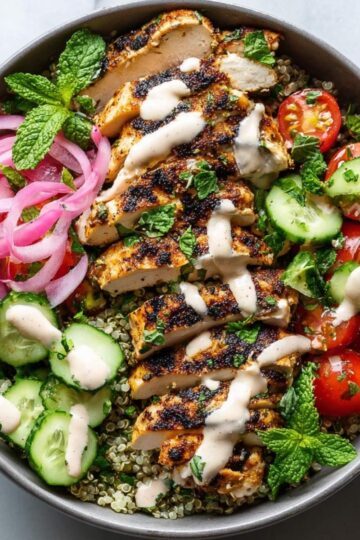
- Assemble the bowls. Spoon a generous base of warm couscous or quinoa into each bowl. Add a generous dollop of garlicky hummus to one side of the bowl. Arrange the chopped romaine or baby spinach, halved cherry tomatoes, sliced cucumber, and red onion around the bowl. Lay the sliced steak over the top. Scatter the kalamata olives and crumbled feta over everything. Drizzle generously with the herbed Greek yogurt dressing and finish with fresh parsley.
Hint: Get your cast iron or grill pan as hot as possible before the steak goes in. A properly screaming hot pan is what gives you that deep, caramelized crust that makes this Mediterranean steak bowl taste like restaurant food. If the pan is not hot enough, the steak steams rather than sears and you miss out on the Maillard reaction crust that makes every bite so deeply flavorful.
My Chicken Gyros use the same Greek yogurt marinade technique and are another incredible Mediterranean dinner to add to your weeknight rotation.
My Top Tips for Mediterranean Steak Bowl
Please let the steak come to room temperature before it hits the pan. I know it feels like an unnecessary step when you are hungry and dinner needs to happen, but cold steak hitting a hot pan is one of the most common reasons home cooks end up with steak that is grey and overcooked on the outside before the inside reaches the right temperature. Thirty minutes on the counter makes a genuinely significant difference and it costs you nothing but a little patience.
Gold Tip: Make all your bowl components ahead of time and store them separately in the fridge. The grain base keeps for 4 days, the herbed yogurt dressing keeps for 5 days, and the chopped vegetables keep for 3 days. With everything prepped and ready, assembling a Mediterranean steak bowl on any night of the week takes about 5 minutes plus the time to cook the steak. That is faster than any delivery app and infinitely better.
Little Moments in the Kitchen
The first time I made a Mediterranean steak bowl for Olivia, she walked into the kitchen, saw the array of toppings spread out on the counter, and immediately said, "Are we having a restaurant dinner at home?" I told her yes and she pulled up a stool at the counter and started rearranging the toppings into little piles like she was setting up a buffet.
She built her own bowl with approximately three times the normal amount of hummus, zero olives, and a mountain of feta that was genuinely impressive for an eleven-year-old. She took one bite of the marinated steak over the couscous with the yogurt dressing drizzled over the top and went completely quiet for a moment. Then she looked up and said, "This is better than a real restaurant." She finished every single bite and then asked if she could have the leftover steak for lunch the next day. I said yes and she nodded like that was the correct answer. We have been making this bowl on rotation ever since.
Substitutions for Mediterranean Steak Bowl
- Grain base: Couscous is the fastest option and cooks in just 5 minutes. Quinoa, brown rice, farro, or fluffy white rice all work beautifully as the base of a Mediterranean steak bowl with rice. Use whatever you have on hand and cook it in broth rather than water for extra flavor every time.
- Protein swap: Not a beef night? Swap the flank steak for grilled chicken thighs, shrimp, or crispy roasted chickpeas for a fully plant-based version. The Mediterranean steak marinade works just as well on chicken as it does on beef. No changes needed to the prep process at all.
- Dairy-free: Replace the Greek yogurt dressing with a tahini lemon dressing using 3 tablespoons tahini, 2 tablespoons lemon juice, 1 garlic clove, and water to thin. Skip the feta or use a dairy-free alternative. The bowl is still rich, creamy, and deeply flavorful without any dairy.
- Hummus-free: Not a hummus fan? A generous spoonful of tzatziki sauce with cucumber and dill works beautifully as the creamy base element instead. It fits the same Greek flavor profile and adds a cool, fresh note under the warm sliced steak.
Variations on Mediterranean Steak Bowl
Greek-Inspired Steak Bowl with Lemon and Rice
This version is inspired by the kind of Mediterranean steak bowl you find at popular Greek fast-casual restaurants, including the well-known Nick the Greek chain. Use white rice as the base, add a generous scoop of hummus to the side of the bowl, layer in the sliced flank steak, and finish with pickled red onions, kalamata olives, and a drizzle of fresh lemon juice mixed with olive oil. It is a beautifully simple combination that lets the marinated beef and fresh toppings shine. It costs a fraction of the price to make at home and comes together in about the same time it would take to pick up an order.
Mediterranean Steak Salad Version
Skip the grain base entirely and build the bowl over a large bed of chopped romaine and baby spinach. Top with the sliced marinated steak, charred cherry tomatoes and red onion, crumbled feta, kalamata olives, and the herbed Greek yogurt dressing. This version is lighter and works beautifully as a summer dinner or a lunch that still feels substantial and satisfying. It is a Greek steak bowl in salad form and it is honestly one of my favorite ways to eat leftover steak from the night before.
Greek Steak Bowl with Roasted Vegetables
Add a tray of roasted red peppers, zucchini, and cherry tomatoes to the bowl alongside the fresh toppings. Roast at 425°F with olive oil, oregano, and garlic for 20 to 25 minutes until caramelized and tender. The roasted vegetables add a warm, smoky sweetness that pairs beautifully with the bold marinade on the steak and makes the whole bowl feel more substantial during colder months. My Winter Harvest Dinner Bowl uses the same roasted vegetable approach if you want to explore that cozy bowl direction further.
Equipment for Mediterranean Steak Bowl
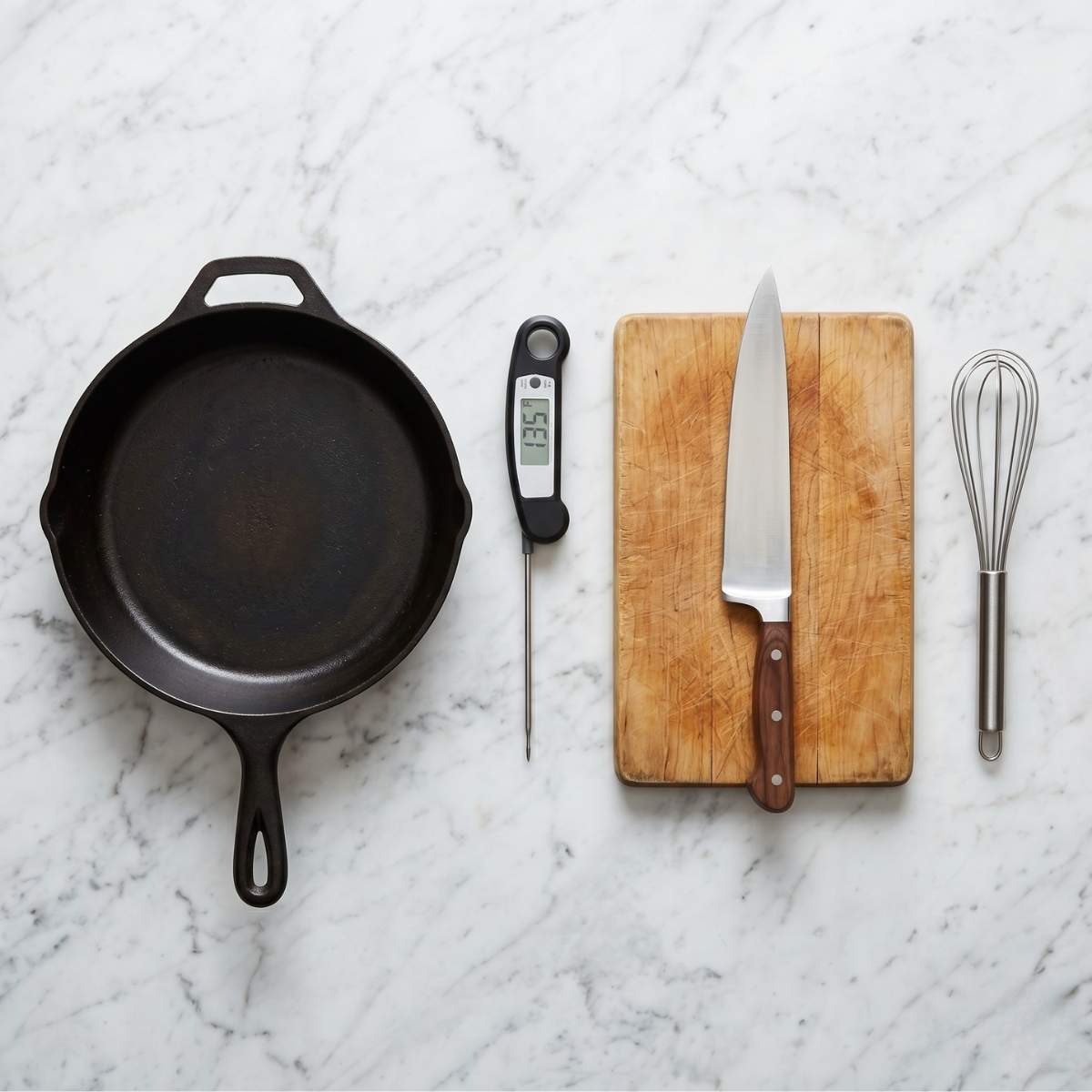
- Cast iron skillet or grill pan: The best tool for cooking flank steak for a Mediterranean steak bowl indoors. Cast iron reaches and holds the very high temperatures you need for a deep, caramelized crust. A grill pan adds attractive grill marks and allows some fat to drain away from the steak during cooking. Either option produces far better results than a regular non-stick pan, which cannot safely reach the temperatures needed for a proper sear.
- Instant-read meat thermometer: Take the guesswork out of steak doneness completely. Insert into the thickest part of the steak and pull at 130 to 135°F for medium-rare or 140 to 145°F for medium. Carryover cooking during the resting period will bring the temperature up another 3 to 5 degrees after it comes off the heat.
- Sharp carving knife and cutting board: For slicing the rested steak against the grain into thin, even pieces. A sharp knife is the difference between clean, restaurant-style slices and torn, ragged pieces. A board with a juice groove around the edge catches all the flavorful resting juices so nothing is wasted.
- Small whisk and jar with lid: For the herbed Greek yogurt dressing. Making it in a mason jar means you can shake it together in seconds and store it directly in the same jar in the fridge for the rest of the week.
Storage Tips for Mediterranean Steak Bowl
- Fridge: Store all Mediterranean steak bowl components separately in airtight containers in the fridge for up to 4 days. Keep the steak, grain base, dressing, and fresh toppings in separate containers so nothing goes soggy and everything stays at its best quality for the whole week.
- Reheating the steak: Reheat sliced steak gently in a skillet over medium-low heat with a tiny splash of beef broth or water for about 2 minutes, just until warmed through. Overheating will push the steak past your preferred doneness and dry it out. Alternatively, enjoy the leftover steak cold over the grain base with the yogurt dressing, which is honestly one of the best lunches I can think of.
- Steak freezer storage: Cooked flank steak freezes well for up to 2 months. Let it cool completely, slice it first, then layer between sheets of parchment paper in a freezer bag. Thaw overnight in the fridge and use cold in a salad or reheat gently in a skillet.
- Dressing storage: The herbed Greek yogurt dressing keeps in a sealed jar in the fridge for up to 5 days. It will thicken slightly as it sits, so add a small splash of water and stir or shake before using. Do not freeze the dressing as the yogurt will separate and become grainy when thawed.
Olivia's Tip for Mediterranean Steak Bowl
Olivia says the hummus needs to be on the bottom of the bowl, not on the side. "Put it under everything, Mom. It makes every bite better." She also says you need to add feta to literally every layer as you build the bowl, not just on top. She demonstrated this once by adding feta to the couscous, the steak layer, and then again on top and I have to say she was completely right. Do not be shy with the feta.
FAQ About Mediterranean Steak Bowl
What do you put in a Mediterranean bowl?
A great Mediterranean steak bowl is built on five key components: a grain base (couscous, quinoa, or rice), a protein (marinated grilled steak, chicken, or chickpeas), a creamy element (hummus, tzatziki sauce with cucumber and dill, or herbed Greek yogurt dressing), fresh Mediterranean vegetables (cherry tomatoes, cucumber, romaine, and red onion), and bold finishing toppings (kalamata olives, crumbled feta, and fresh herbs). The combination of warm grains, tender protein, creamy sauce, and bright fresh vegetables is what makes a Mediterranean bowl so satisfying and complete.
What steak is best for a steak bowl?
Flank steak is my top choice for a Mediterranean steak bowl because it is lean, full of deep beefy flavor, and takes on a marinade beautifully. Top sirloin is an excellent alternative with a slightly more tender texture that requires less marinade time. Skirt steak is another solid option with a similar grain structure to flank that benefits from an overnight marinade. Whatever cut you choose, always slice against the grain after resting for the most tender result and the best overall eating experience.
What is in a popular restaurant-style Mediterranean steak bowl?
The Mediterranean steak bowl served at popular Greek fast-casual restaurants like Nick the Greek typically features thinly sliced marinated beef served over seasoned rice with a generous scoop of hummus, kalamata olives, sliced cucumber, tomato, red onion, and a bright lemon herb dressing. It is a beautifully straightforward combination that lets the quality of the marinated beef and the freshness of the toppings do all the talking. The Greek-inspired variation in the Variations section above is my closest homemade version and it is genuinely hard to tell the difference once it is in the bowl.
What is Mediterranean steak?
Mediterranean steak refers to beef that has been marinated in a blend of classic Mediterranean flavors including olive oil, lemon, garlic, oregano, and often balsamic vinegar or Dijon mustard, then grilled or seared at high heat. The marinade tenderizes the meat and builds a bold, herby, slightly tangy flavor profile that is distinctly different from American-style steakhouse preparations. Mediterranean steak recipes often feature flank or sirloin cuts because they absorb marinades deeply and cook quickly at high heat, making them ideal for weeknight meals that deliver serious flavor without a lot of hands-on time.
Conclusion
This Mediterranean steak bowl brings together everything I love about cooking for my family: bold flavor, fresh ingredients, a recipe that looks impressive but does not take all night, and a dinner that genuinely makes everyone at the table happy. Once you nail the flank steak marinade and get your bowl assembly routine down, this becomes one of those dinners you come back to again and again.
Give it a try this week and let me know in the comments what grain you used and how you built your bowl! And if you are building out your dinner rotation with more bold, satisfying meals, my Sheet Pan Cashew Chicken and Cranberry Orange Turkey are both weeknight favorites worth adding to the list. For even more Mediterranean dinner inspiration, this Mediterranean Stuffed Swordfish from Allrecipes is a beautiful next step once you have mastered the bowl. Happy cooking, friends!
Related
Looking for other recipes like this? Try these:



Pairing
These are my favorite dishes to serve with Mediterranean Steak Bowl:




📖 Recipe
Easy Mediterranean Steak Bowl
Ingredients
Equipment
Method
- In a bowl, whisk together [olive oil], [balsamic vinegar], [Dijon mustard], [garlic], [oregano], [smoked paprika], and [lemon juice]. Olivia loves whisking this part, she says it smells like a restaurant already.
- Place the [flank steak] in the marinade and coat well. Cover and refrigerate. I always tell Olivia this is where the magic happens, time makes everything taste better.
- Cook [couscous or quinoa] in [broth] according to instructions. Olivia fluffs it with a fork like she's a chef on TV, it's her favorite little job.
- Mix [Greek yogurt], [lemon juice], [garlic], and [fresh herbs] until smooth. Add a splash of water if needed. Olivia always tastes it and says, 'needs more lemon!' and she's usually right.
- Heat a skillet and cook the marinated [flank steak] for 3-4 minutes per side. The sizzle is Olivia's favorite sound, it means dinner is almost ready.
- Let the steak rest, then slice thinly against the grain. I show Olivia how to look for the lines, it's a small detail that makes a big difference.
- Layer [couscous], [hummus], [romaine], [tomatoes], [cucumber], [red onion], and sliced steak. Top with [olives] and [feta], then drizzle dressing. Olivia builds hers like a masterpiece, extra feta every time.
Nutrition
Notes
- Slice the steak against the grain for maximum tenderness.
- Swap steak for chicken or chickpeas for a different variation.
- Store ingredients separately in the fridge for up to 4 days.
- Let kids build their own bowls, it makes dinner more fun and stress-free.


Leave a Reply